









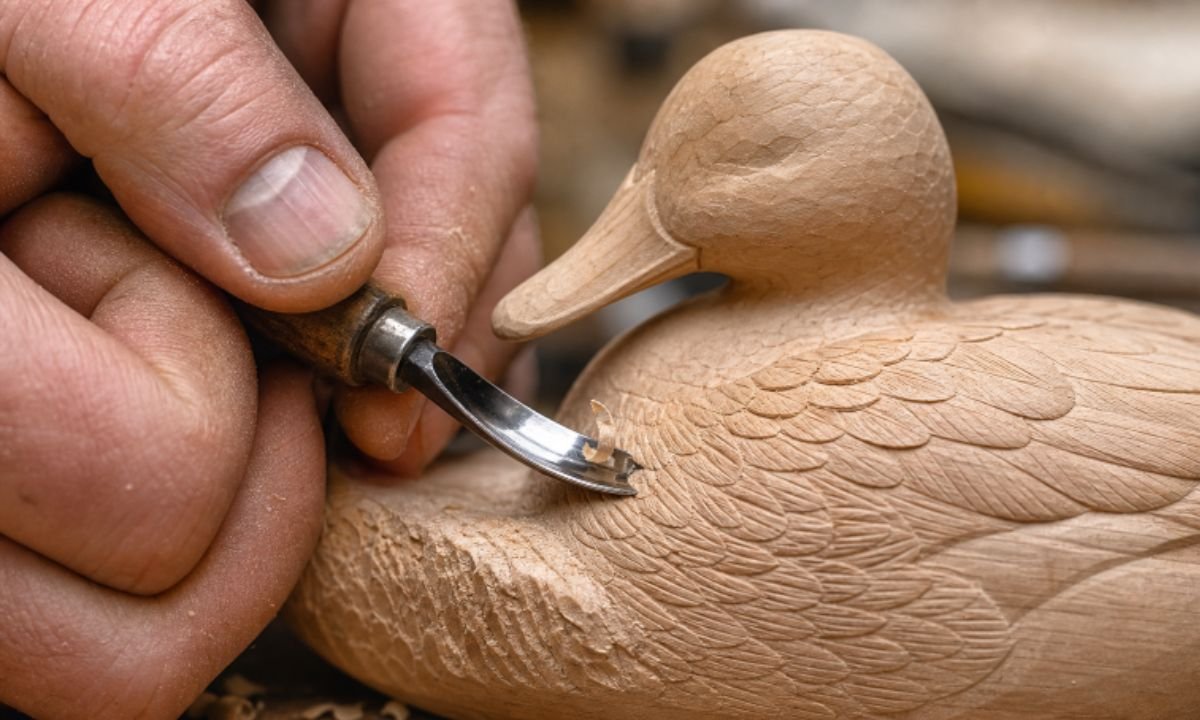
Learning to carve a realistic duck, goose, shorebird, or other waterfowl species takes more than a sharp tool and a block of wood. Carvers must learn to recognize accurate proportions, natural posture, feather flow, species-specific markings, and the small details that make a finished bird feel alive. For artists seeking wildfowl carving Raleigh, NC instruction, Vic Kirkman Originals provides a focused path for developing those skills through local and online learning options.
Vic Kirkman Originals serves beginners who need a clear starting point, intermediate carvers ready to refine their work, and experienced artists pursuing advanced decorative birds or hunting decoys. Students can choose between hands-on Raleigh-area studio instruction and weekly online guidance, allowing them to build a carving practice that fits their location, project goals, tools, and available time.
Why Choose Vic Kirkman Originals for Wildfowl Carving?
Vic Kirkman Originals is led by North Carolina artist Vic Kirkman, whose interest in Southeastern wildlife developed through a hunting and fishing family background. Based in Raleigh since attending North Carolina State University, Vic brings a regional appreciation for birds and habitats to his teaching. The business reports more than 30 years of experience teaching wildfowl woodcarving.
That experience matters because wildfowl carving involves a sequence of decisions. A student must establish the silhouette before adding detail, shape major body masses before carving feather groups, and understand the bird’s posture before painting its color patterns. Guided instruction can help a carver work through those decisions in the right order rather than trying to repair major form problems after the fine detail is complete.
How In-Studio Raleigh Classes Help Carvers Improve
For students within approximately 100 miles of Raleigh, Vic Kirkman Originals offers weekly instruction in a furnished studio setting. In-person learning gives carvers the opportunity to ask questions as they work and receive direct feedback on tools, anatomy, form, texture, and finish.
What Students Can Expect in a Studio Class
- Weekly, hands-on sessions in a comfortable Raleigh studio.
- Guidance for beginners as well as more experienced carvers.
- Feedback on body shape, head placement, wing position, and natural posture.
- Practical help with tool selection, tool control, and carving sequence.
- Support as a project progresses from rough block-out through painting and presentation.
Live feedback can be especially valuable when a carver is learning to judge a bird’s silhouette. A head that is slightly oversized, a neck that is too thick, or a body that sits at the wrong angle can affect the entire piece. Catching those issues early gives the student a better foundation for feather detail and paint.
Can You Learn Wildfowl Carving Online?
Yes. Vic Kirkman Originals also offers weekly Zoom instruction for students throughout the United States and Canada. Online classes can be a practical fit for carvers who live outside the Raleigh area, prefer to work in their own shop, or need a format that better matches their schedule. Small-group and private options may be available, and students can work on a species of their choice.
Online Learning Readiness Checklist
- A recent desktop computer or laptop with reliable internet access.
- An external webcam, or a camera setup that clearly shows the carving work.
- A safe carving workspace close enough to the device for live discussion.
- Basic comfort with sending messages and sharing project photos.
- The tools, wood, reference materials, and equipment needed for the chosen project.
- Regular time each week to carve, review feedback, and continue progressing.
Online instruction works best when the student can provide clear views of the carving from multiple angles. This allows the instructor to comment on profile, balance, surface transitions, feather placement, and areas that may need more refinement before the next step.
Skills Students Can Develop Through Wildfowl Carving Instruction
Wildfowl carving is a layered craft. Vic Kirkman Originals can help students build skills in several connected areas, including:
- Bird form: Establishing proportions, body mass, balance, and a natural silhouette.
- Species detail: Studying the physical traits that distinguish one duck, goose, or other bird from another.
- Feather work: Creating texture, layering, and pattern without making the surface look mechanical.
- Painting and finish: Using color, contrast, and surface treatment to support realism.
- Tool use: Choosing and controlling tools appropriate to the project and the carver’s experience.
- Project planning: Moving from species selection and reference gathering to carving, painting, and final display.
Why Species Research Matters Before Carving Begins
Realistic bird art begins with observation. Before removing wood, a carver should study the chosen species from different views and pay attention to posture, head and bill shape, wing placement, habitat, seasonal plumage, and behavior. A bird can have carefully carved feathers and still look unconvincing if its proportions or stance are not true to the species.
Useful reference study includes photographs, field observation, and trusted educational materials. The Cornell Lab of Ornithology’s guide to feather structure can help students understand why feather groups have different shapes and textures. For species study, the U.S. Fish and Wildlife Service also provides waterfowl identification resources that can support closer observation of distinguishing characteristics.
Vic Kirkman Originals can help turn that research into a workable carving plan. Instead of copying every visible line in a photograph, students can learn to identify the large forms first, then use reference details to guide the smaller transitions, feather groupings, and paint patterns.
Is Wildfowl Carving a Good Hobby for Older Adults?
Wildfowl carving can be a rewarding creative activity for adults who enjoy patient, skill-based work. Progress comes through regular practice, observation, and steady improvement rather than speed. Students should select projects, tools, lighting, seating, and work positions that are appropriate for their individual comfort and physical ability.
Safe carving habits remain essential at every experience level. Good lighting, secure work holding, organized tools, and careful hand placement can make the process more comfortable and help reduce avoidable mistakes. Vic Kirkman Originals should be viewed as an instructional resource for developing craft skills, not as a provider of medical or therapeutic services.
Instruction for Beginners, Intermediate Carvers, and Advanced Artists
For New Carvers
Beginning students can focus on safe tool handling, basic forms, simple project planning, and learning how to see a bird as connected masses rather than a collection of details. Starting with manageable projects helps prevent frustration and builds confidence.
For Intermediate Carvers
Intermediate students can refine anatomy, feather patterns, species accuracy, and transitions between broad forms and smaller details. Instructor feedback is useful when a project looks close to correct but needs adjustment in posture, symmetry, or surface flow.
For Advanced Carvers
Advanced carvers may pursue more complex decorative pieces, competition-oriented presentation, specialized species studies, and higher levels of realism in bird carvings or hunting decoys. Individualized guidance can help them concentrate on the technical decisions that matter most to a specific project.
Additional Learning Resources From Vic Kirkman Originals
Classes are only part of the learning opportunity. Vic Kirkman Originals also provides carving demonstrations, beginner basics, articles, reference material, gallery content, and student-focused pages. These resources can help students continue studying between sessions, review techniques, and see how other carvers approach their work. The broader online community also creates an opportunity for carvers to stay connected to the craft.
How to Request Wildfowl Carving Instruction
- Decide whether Raleigh studio instruction or online learning is the better fit.
- Identify your current skill level and the type of project you want to pursue.
- Choose a preferred species, decorative bird, or decoy project.
- Review your available tools, workspace, technology, and weekly practice time.
- Contact Vic Kirkman Originals through its request form.
- Share your location, goals, experience, equipment, and preferred class format.
Frequently Asked Questions
Does Vic Kirkman Originals offer classes in Raleigh, NC?
Yes. Vic Kirkman Originals offers in-studio instruction in Raleigh for students in the surrounding region, along with online instruction for remote students.
Are the classes appropriate for beginners?
Yes. Beginners can start with foundational methods, basic forms, and safe tool practices before moving into more detailed carving work.
Can students study a particular bird species?
Yes. Online students may work on a species of their choice. Project details and availability should be confirmed directly when requesting instruction.
Does Vic Kirkman Originals teach decorative carving and decoys?
Yes. Instruction covers realistic bird carvings, decorative wildfowl art, and hunting decoy techniques.
Build Your Wildfowl Carving Skills With Focused Guidance
Vic Kirkman Originals gives local and remote students a practical way to develop wildfowl carving skills through studio classes, Zoom instruction, demonstrations, and supporting resources. Whether the goal is to complete a first bird, improve realistic feather work, or pursue a more advanced decorative piece, structured guidance can help turn careful observation and consistent practice into stronger carving results.