








In Statesville, a garage door often serves as a daily entry point for vehicles, storage, pets, and family routines. That frequency makes small changes in movement, sound, or balance worth noticing early. Homeowners researching a local garage door concern can use this checklist to separate safe observations from problems that should not be handled without proper training. A garage door repair is a connected system, not simply a large panel on tracks. Springs, cables, rollers, hinges, tracks, brackets, and the opener all work together to raise and lower a substantial load. When one part binds, loosens, or fails, the rest of the system can be affected.
Why Garage Door Safety Matters
Residential garage doors use counterbalance systems to make a heavy door manageable. That is useful in normal operation, but it also means springs and cables can hold significant tension. The federal safety standard for automatic residential garage door operators addresses entrapment protection requirements, reinforcing why reversal features and safe operating habits matter. For homeowners considering a planned replacement rather than responding to a malfunction, garage door installation decisions should account for the door’s weight, compatible opener equipment, clearance, and safety features. A door and opener must operate as a balanced system.
Early Warning Signs to Watch
New noises and uneven travel do not always identify the exact failed part, but they provide a useful reason to stop and inspect from a distance. Watch for these changes during normal use:
- Grinding, scraping, popping, or unusually loud squealing.
- Shaking, hesitation, or movement in short bursts.
- One side rising or lowering faster than the other.
- A door that reverses without an obvious obstruction.
- A visible gap in a torsion spring or a slack, frayed, or displaced cable.
- Rollers that wobble, tracks that look bent, or panels that appear misaligned.
- A door that feels unexpectedly heavy when manually operated as directed by its owner’s manual.
Safe Checks Homeowners Can Perform
Simple visual checks
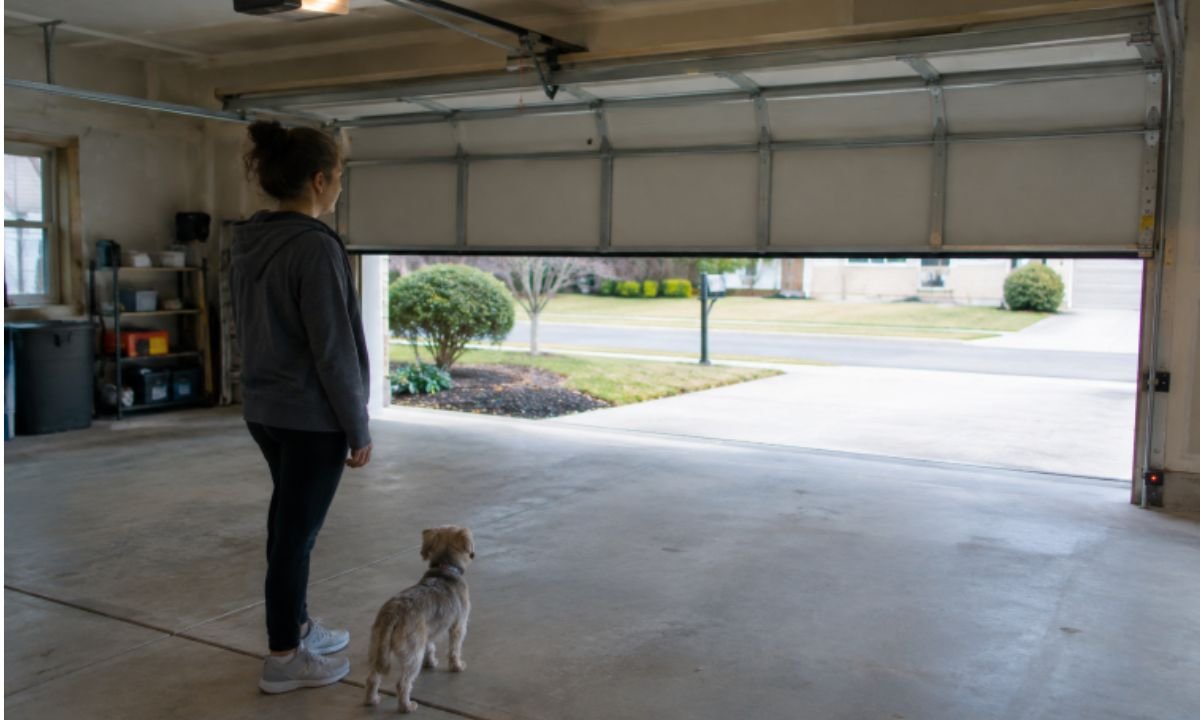
Keep your hands away from moving components, and observe one complete opening-and-closing cycle from a safe location. Look for loose-looking hardware, damaged weather seals, bent track sections, worn panels, and stored items that block the door’s path of travel. Confirm that photo-eye sensors are facing each other and that their lenses are clean enough to inspect visually.
Actions to avoid
- Do not pull on a loose lift cable or attempt to reseat one on a drum.
- Do not adjust, remove, or wind a spring.
- Do not stand beneath a partially open door.
- Do not force a crooked, jammed, or off-track door.
- Do not keep pressing the opener when the door is binding or reversing repeatedly.
When to Stop Using the Door
Stopping use can prevent a minor mechanical problem from becoming a more dangerous situation. Leave the door alone and keep people clear if it hangs unevenly, drops suddenly, will not remain open, has left the track, or shows a broken spring or loose cable. The same caution applies when the opener hums, strains, or repeatedly reverses without completing its cycle.
Common Garage Door Problems and What They May Mean
The door will not open.
Start with basic checks such as power to the opener, remote batteries, a locked manual door, or an obstruction in the opening. If those are not the cause, the issue may involve the opener, the safety system, or the counterbalance hardware. A motor that runs does not prove the door itself is safe to move.
The door opens only partway.
Resistance in the tracks, an obstruction, sensor issues, travel-setting concerns, or uneven door weight can interfere with movement. Repeated attempts can strain the opener, so avoid using it to force the door through resistance.
The door is noisy or crooked.
A modest, familiar operating sound differs from a sudden snap, scrape, or grinding noise. A crooked door may be connected to a cable, roller, spring, or track problem. Do not try to straighten it by lifting one side or forcing it closed.
Garage Door Opener Safety Checks
Read the owner’s manual before testing any opener feature. Keep the door in sight while it moves, keep remotes out of children’s reach, and make sure the wall control is not readily accessible to small children. Test the photo-eye system as directed by the manufacturer, and do not walk or drive under a door that has stopped partway open. Common counterbalance and pinch-point hazards also serve as a reminder that a moving door is not a safe place for children, pets, or hands.
Seasonal Care for Statesville Homes
Seasonal changes can reveal issues that were less noticeable during mild weather. In winter, check for moisture or ice around the threshold and avoid forcing a frozen bottom seal. In spring, look for rust, worn seals, or damage that became apparent after colder weather. Summer heat and humidity can make an already strained system more noticeable, while fall is a useful time to clear leaves, tools, and stored items away from the tracks and sensor path.
Common Homeowner Questions
Can a homeowner lubricate a garage door?
Light maintenance may be appropriate when the owner’s manual permits it. Use only products recommended for the relevant components, and do not treat lubricant as a solution for worn, loose, or damaged hardware.
How often should the door be checked?
Brief visual checks throughout the year help catch changes in noise, balance, and travel. Follow the opener manufacturer’s schedule for safety testing, especially after adjusting any opener setting or noticing unusual operation.
Is a broken spring an emergency?
A broken spring can leave the door heavy and unstable. Keep the door closed when possible, do not attempt to lift it alone, and avoid using the opener until the system can be assessed safely.
Final Checklist
- Watch the door during every test and operating cycle.
- Keep children, pets, and objects out of the door’s path.
- Do not touch springs, cables, bottom brackets, or unstable hardware.
- Stop using a door that becomes heavy, crooked, noisy, or unpredictable.
- Use the owner’s manual for routine checks and opener testing.
- Seek trained help for repairs involving stored tension, cables, tracks, or door balance.
Small changes in speed, sound, alignment, or stopping behavior can provide an early warning. Careful observation, routine safety checks, and clear limits on DIY work can help Statesville homeowners reduce risk and maintain dependable garage access throughout 2026. For questions about garage door repair in Statesville, professional technicians can assess the system’s safety and perform work that requires specialized training.