










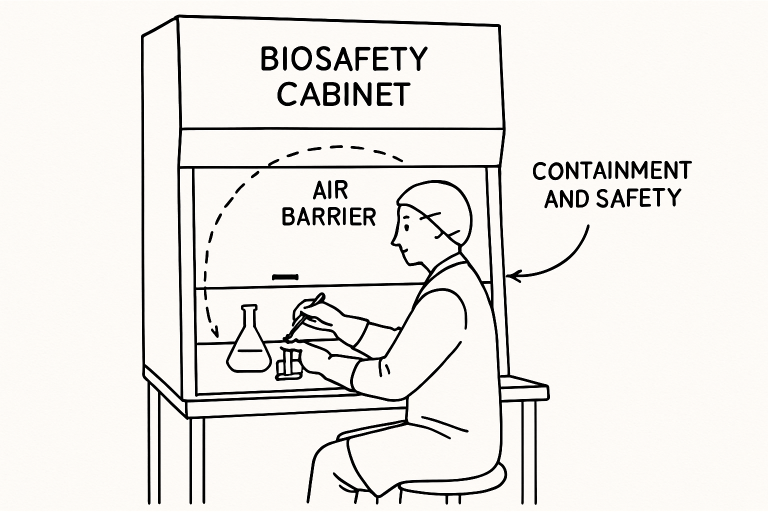
Biosafety cabinets (BSCs) are foundational for laboratories working with hazardous or infectious materials. These cabinets are engineered to protect not only laboratory personnel but also the research and the surrounding environment. Maintaining laboratory safety requires more than just owning a BSC; it also involves proper bio-safety cabinet testing to ensure optimal performance and compliance with safety regulations.
BSC certification and maintenance are ongoing for laboratories, ensuring containment and air filtration systems work properly. Regular assessments prevent accidents and exposure, making safety routine. Proactive certification and training uphold safety and industry standards, avoiding contamination, worker illnesses, and costly issues. Advanced science and public health depend on strict containment, so biosafety cabinets require expert oversight. For regulatory standards, visit OSHA’s Laboratory Safety Guidance. Biosafety cabinets are ventilated enclosures with HEPA filters protecting labs from biohazards, trapping infectious particles, and safeguarding users and samples. They come in three classes—Class I, II, and III—with Class II most common in clinical and research labs due to balanced protection. Each class uses HEPA filters, but operational differences exist. The CDC offers a detailed overview of BSC classifications.
The Importance of Certification
Certification of BSCs is not only a best practice, but a regulatory requirement in many jurisdictions. Regular certification ensures that the unit maintains appropriate airflow velocities, filter integrity, and containment performance in accordance with the manufacturer’s and regulatory standards. These parameters are key to preventing laboratory-acquired infections and contamination incidents.
According to the CDC, routine BSC evaluation (at least annually, or after relocation or repair) is critical for the safe operation of laboratories. Proper certification demonstrates to inspectors, regulatory agencies, and laboratory users that the environment meets essential safety requirements. Failure to recertify a BSC can result in fines, loss of research permits, and immediate operational shutdowns.
The Certification Process
Certifying a biosafety cabinet involves a performance assessment by approved technicians called field certifiers. First, the cabinet is visually inspected for wear or damage. Then, certifiers check airflow, HEPA filter function through leak tests, and conduct smoke-pattern tests to ensure containment. Certifiers undergo specialized training and certification from organizations like NSF, following standardized protocols and using calibrated tools to ensure reliable, repeatable results.
Best Practices for BSC Use
Maximizing the protection a BSC provides requires strict adherence to best practices for use. Laboratory personnel should position their work at least four inches inside the cabinet’s surface to prevent turbulence at the sash edge. Rapid or sweeping hand motions should be minimized, as these disrupt the BSC’s carefully controlled airflow.
Keeping the work zone in the BSC free from clutter ensures that air can circulate freely, reducing the risk of improper containment. Surfaces inside the BSC should be disinfected before and after each work session, and all unnecessary items removed prior to use. Adopting a clean-to-dirty workflow and never blocking the airflow grille further enhances containment.
Common Mistakes and How to Avoid Them
Mistakes that undermine safety in BSC usage are often simple oversights. Overfilling the cabinet with supplies can block essential airflow, and performing delicate operations too close to the front grille raises the risk of exposure. Another frequent error is making brisk arm movements within the cabinet, which can compromise airflow integrity.
These mistakes are preventable through comprehensive staff training and a well-established safety culture. Leading institutions actively promote regular refresher courses, provided by organizations such as the Eagleson Institute, to reinforce safe cabinet use. Peer observation and routine internal audits can further curb bad habits and ensure practices align with safety standards.
Training and Education
Continuous training is vital for all laboratory personnel who work with or near biosafety cabinets. The CDC offers accessible resources and continuing education programs to boost laboratory safety and awareness. Staying up to date with BSC maintenance, proper operation, and emergency procedures helps maintain a safe work environment for everyone in the laboratory.
Laboratory managers should ensure that all users understand the risks inherent to their work and the practical steps required to mitigate them. Investing in ongoing education results in fewer accidents, reduced downtime, and a higher overall standard of laboratory safety.
Conclusion
Biosafety cabinet certification plays an indispensable role in upholding laboratory safety. By committing to regular testing, embracing proven best practices, and ensuring that all users receive continual training, laboratories build a secure environment that protects people, products, and the broader community from biological hazards. Proactive certification and skilled cabinet use make safety an ingrained aspect of daily laboratory life rather than a reactive measure after incidents occur.
READ ALSO: How Proper Pavement Marking Improves Safety and Efficiency